Download Dot Vehicle Inspection Template
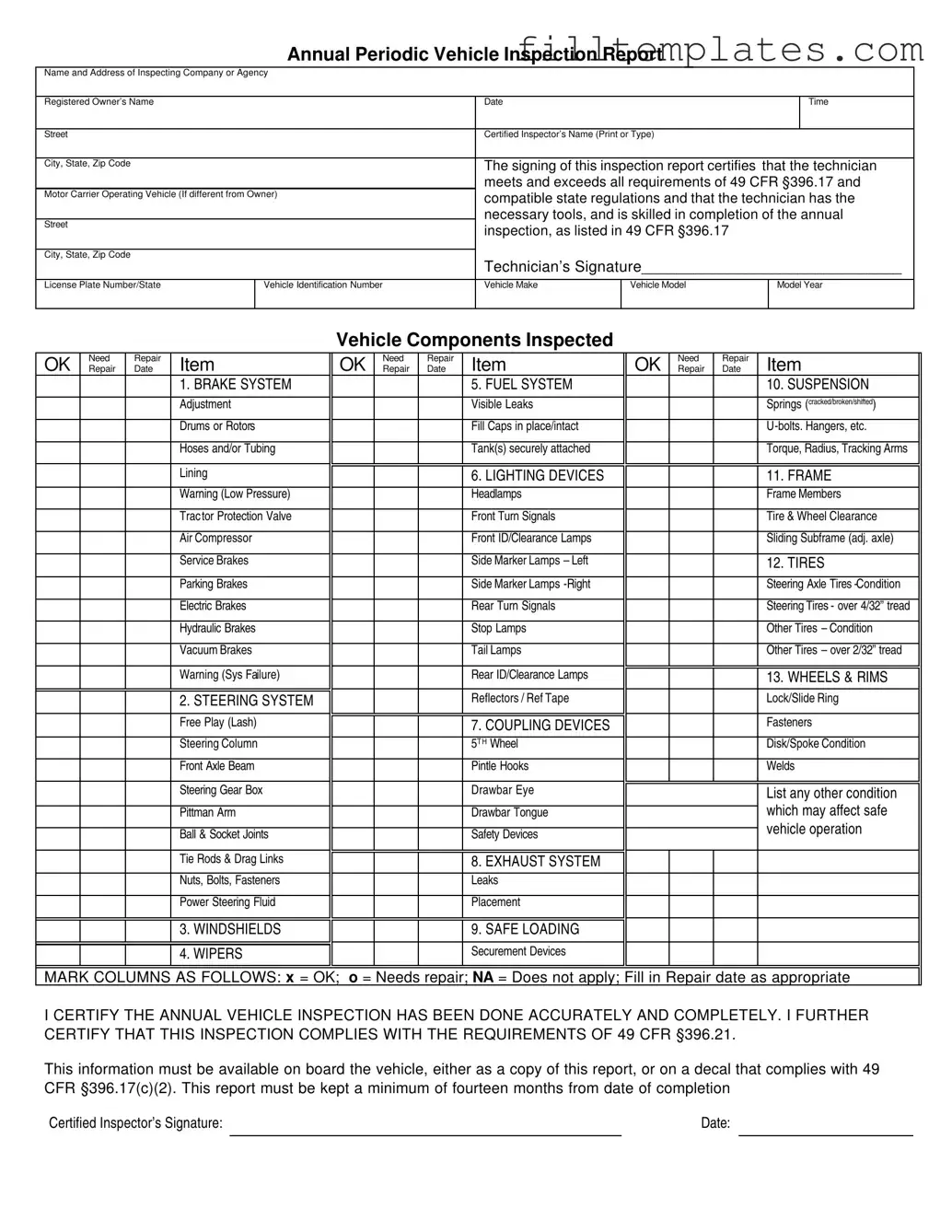
The DOT Vehicle Inspection form plays a crucial role in ensuring the safety and compliance of commercial vehicles on the road. This comprehensive report captures essential details such as the name and address of the inspecting company, the registered owner's information, and the technician's qualifications. It serves as a record of the inspection conducted, detailing the date and time of the assessment, as well as the inspector's signature, which certifies that all necessary requirements have been met according to federal regulations. The form meticulously lists various vehicle components that must be inspected, including the brake system, steering, tires, and lighting devices, among others. For each component, inspectors indicate whether it is in good condition or needs repair, providing a clear overview of the vehicle's status. Additionally, the form emphasizes the importance of proper technician qualifications, ensuring that only skilled individuals perform these critical inspections. Keeping this report on board the vehicle is not just a regulatory requirement but also a vital part of maintaining road safety. The information must be retained for a minimum of fourteen months, underscoring the ongoing commitment to vehicle safety and compliance.
Key takeaways
Filling out and using the DOT Vehicle Inspection form is a critical process for ensuring vehicle safety and compliance. Here are some key takeaways to consider:
- Accurate Completion: Ensure all sections of the form are filled out completely and accurately. This includes the names, dates, and vehicle details. Missing information can lead to compliance issues.
- Inspection Criteria: Inspectors must understand the inspection criteria outlined in the relevant regulations. Familiarity with the specific components listed, such as the brake system and lighting devices, is essential for a thorough evaluation.
- Certification Requirements: The form requires the inspector to certify their qualifications. Inspectors must have the necessary training or experience to conduct inspections effectively. This includes understanding inspection methods and being knowledgeable about vehicle components.
- Record Keeping: The completed inspection report must be retained for a minimum of fourteen months. It should be accessible on board the vehicle, either as a physical copy or a compliant decal. This is crucial for regulatory compliance and safety audits.
Guide to Writing Dot Vehicle Inspection
Filling out the DOT Vehicle Inspection form is a straightforward process. This form is essential for ensuring that a vehicle meets safety standards and is in good working condition. Follow these steps carefully to complete the form accurately.
- Begin by entering the Name and Address of the inspecting company or agency at the top of the form.
- Next, fill in the Registered Owner’s Name.
- Record the Date and Time of the inspection.
- Provide the Street, City, State, Zip Code of the registered owner.
- Write the Certified Inspector’s Name (print or type).
- If the vehicle is owned by someone different than the registered owner, fill in the Motor Carrier Operating Vehicle information.
- Enter the Technician’s Signature in the designated space.
- Fill in the License Plate Number/State and the Vehicle Identification Number (VIN).
- List the Vehicle Make, Vehicle Model, and Model Year.
- Proceed to the Vehicle Components Inspected section. For each item, mark it as follows: x for OK, o for Needs Repair, and NA for Does Not Apply.
- For items marked as needing repair, fill in the Repair Date next to each applicable item.
- At the bottom of the form, the certified inspector must sign and date the report.
- Ensure that the inspector qualifications section is completed, checking all applicable categories and providing necessary details.
- Finally, confirm that the evidence of inspector qualification is on file.
Browse Other PDFs
Ucc 308 Without Prejudice - Correctly utilizing the UCC 1-308 can enhance your legal defensibility.
To ensure a smooth transaction and avoid disputes, it is essential to use the correct documentation, such as the Texas Vehicle Purchase Agreement form, which can be found at TopTemplates.info. This form clearly delineates the terms of the sale, making it easier for both buyers and sellers to navigate their responsibilities.
What Does It Mean If a Business Is Not Bbb Accredited - Company's website errors making transactions impossible.
Form Preview Example

Annual Periodic Vehicle Inspection Report
Name and Address of Inspecting Company or Agency
Registered Owner’s Name |
|
Date |
|
|
Time |
|
|
|
|
|
|
Street |
|
Certified Inspector’s Name (Print or Type) |
|
|
|
|
|
|
|
|
|
City, State, Zip Code |
|
The signing of this inspection report certifies that the technician |
|||
|
|
meets and exceeds all requirements of 49 CFR §396.17 and |
|||
Motor Carrier Operating Vehicle (If different from Owner) |
compatible state regulations and that the technician has the |
||||
|
|
||||
|
|
necessary tools, and is skilled in completion of the annual |
|||
Street |
|
inspection, as listed in 49 CFR §396.17 |
|
|
|
|
|
|
|
||
|
|
|
|
|
|
City, State, Zip Code |
|
|
|
|
|
|
|
Technician’s Signature______________________________ |
|||
|
|
|
|
|
|
License Plate Number/State |
Vehicle Identification Number |
Vehicle Make |
Vehicle Model |
Model Year |
|
|
|
|
|
|
|
Vehicle Components Inspected
OK |
Need |
Repair |
Item |
OK |
Need |
Repair |
Item |
OK |
Need |
Repair |
Item |
|
Repair |
Date |
Repair |
Date |
Repair |
Date |
|
||||||
|
|
|
1. BRAKE SYSTEM |
|
|
|
5. FUEL SYSTEM |
|
|
|
10. SUSPENSION |
|
|
|
|
|
|
|
|
|
|
|
|
|
|
|
|
|
Adjustment |
|
|
|
Visible Leaks |
|
|
|
Springs (cracked/broken/shifted) |
|
|
|
|
Drums or Rotors |
|
|
|
Fill Caps in place/intact |
|
|
|
|
|
|
|
|
|
|
|
|
|
|
|
|
|
|
|
|
|
Hoses and/or Tubing |
|
|
|
Tank(s) securely attached |
|
|
|
Torque, Radius, Tracking Arms |
|
|
|
|
|
|
|
|
|
|
|
|
|
|
|
|
|
Lining |
|
|
|
|
|
|
|
|
|
|
|
|
|
|
|
6. LIGHTING DEVICES |
|
|
|
11. FRAME |
|
|
|
|
|
|
|
|
|
|
|
|
|
|
|
|
|
|
Warning (Low Pressure) |
|
|
|
Headlamps |
|
|
|
Frame Members |
|
|
|
|
|
|
|
|
|
|
|
|
|
|
|
|
|
Tractor Protection Valve |
|
|
|
Front Turn Signals |
|
|
|
Tire & Wheel Clearance |
|
|
|
|
|
|
|
|
|
|
|
|
|
|
|
|
|
Air Compressor |
|
|
|
Front ID/Clearance Lamps |
|
|
|
Sliding Subframe (adj. axle) |
|
|
|
|
|
|
|
|
|
|
|
|
|
|
|
|
|
Service Brakes |
|
|
|
Side Marker Lamps – Left |
|
|
|
12. TIRES |
|
|
|
|
|
|
|
|
|
|
|
|
|
|
|
|
|
Parking Brakes |
|
|
|
Side Marker Lamps |
|
|
|
Steering Axle Tires |
|
|
|
|
|
|
|
|
|
|
|
|
|
|
|
|
|
Electric Brakes |
|
|
|
Rear Turn Signals |
|
|
|
Steering Tires - over 4/32” tread |
|
|
|
|
|
|
|
|
|
|
|
|
|
|
|
|
|
Hydraulic Brakes |
|
|
|
Stop Lamps |
|
|
|
Other Tires – Condition |
|
|
|
|
|
|
|
|
|
|
|
|
|
|
|
|
|
Vacuum Brakes |
|
|
|
Tail Lamps |
|
|
|
Other Tires – over 2/32” tread |
|
|
|
|
|
|
|
|
|
|
|
|
|
|
|
|
|
Warning (Sys Failure) |
|
|
|
Rear ID/Clearance Lamps |
|
|
|
|
|
|
|
|
|
|
|
|
|
|
13. WHEELS & RIMS |
|
||
|
|
|
|
|
|
|
|
|
|
|
|
|
|
|
|
|
|
|
|
Reflectors / Ref Tape |
|
|
|
Lock/Slide Ring |
|
|
|
|
2. STEERING SYSTEM |
|
|
|
|
|
|
|
||
|
|
|
|
|
|
|
|
|
|
|
|
|
|
|
|
Free Play (Lash) |
|
|
|
|
|
|
|
Fasteners |
|
|
|
|
|
|
|
7. COUPLING DEVICES |
|
|
|
|
||
|
|
|
|
|
|
|
|
|
|
|
|
|
|
|
|
Steering Column |
|
|
|
5T H Wheel |
|
|
|
Disk/Spoke Condition |
|
|
|
|
|
|
|
|
|
|
|
|
|
|
|
|
|
Front Axle Beam |
|
|
|
Pintle Hooks |
|
|
|
Welds |
|
|
|
|
|
|
|
|
|
|
|
|
|
|
|
|
|
Steering Gear Box |
|
|
|
Drawbar Eye |
|
|
|
|
|
|
|
|
|
|
|
|
|
|
List any other condition |
|
||
|
|
|
|
|
|
|
|
|
|
|
which may affect safe |
|
|
|
|
Pittman Arm |
|
|
|
Drawbar Tongue |
|
|
|
||
|
|
|
|
|
|
|
|
|
|
|
vehicle operation |
|
|
|
|
Ball & Socket Joints |
|
|
|
Safety Devices |
|
|
|
||
|
|
|
|
|
|
|
|
|
|
|
||
|
|
|
|
|
|
|
|
|
|
|
|
|
|
|
|
Tie Rods & Drag Links |
|
|
|
8. EXHAUST SYSTEM |
|
|
|
|
|
|
|
|
|
|
|
|
|
|
|
|
|
|
|
|
|
Nuts, Bolts, Fasteners |
|
|
|
Leaks |
|
|
|
|
|
|
|
|
|
|
|
|
|
|
|
|
|
|
|
|
|
Power Steering Fluid |
|
|
|
Placement |
|
|
|
|
|
|
|
|
|
|
|
|
|
|
|
|
|
|
|
|
|
|
|
|
|
|
|
|
|
|
|
|
|
|
3. WINDSHIELDS |
|
|
|
9. SAFE LOADING |
|
|
|
|
|
|
|
|
|
|
|
|
|
|
|
|
|
|
|
|
|
|
|
|
|
Securement Devices |
|
|
|
|
|
|
|
|
4. WIPERS |
|
|
|
|
|
|
|
|
|
|
|
|
|
|
|
|
|
|
|
|
|
|
MARK COLUMNS AS FOLLOWS: x = OK; o = Needs repair; NA = Does not apply; Fill in Repair date as appropriate
I CERTIFY THE ANNUAL VEHICLE INSPECTION HAS BEEN DONE ACCURATELY AND COMPLETELY. I FURTHER CERTIFY THAT THIS INSPECTION COMPLIES WITH THE REQUIREMENTS OF 49 CFR §396.21.
This information must be available on board the vehicle, either as a copy of this report, or on a decal that complies with 49 CFR §396.17(c)(2). This report must be kept a minimum of fourteen months from date of completion
Certified Inspector’s Signature: |
|
Date: |
|
|
|
INSPECTOR QUALIFICATIONS
Certification — 49 CFR §396.19
Motor carriers are responsible for ensuring that individual(s) performing an annual inspection under §396.17 are qualified as follows:
•Understands the inspection criteria set forth in Part 393 and Appendix G and can identify defective components
•Is knowledgeable of and has mastered the methods, procedures, tools and equipment used when performing an inspection
•Is capable of performing an inspection by reason of experience, training, or both, and qualifies in one of the following categories (check all that apply):
I.___ Successfully completed a State or Federal training program or has certificate from a State or Canadian Province which qualifies the person to perform commercial vehicle safety inspections.
Specify: _______________________________________
II.___ Have a combination of training or experience totaling at least one year as follows (check all that apply):
a.___ Participation in a truck
Where and Date: _____________________________________________________
b.___ (years) experience as a mechanic or inspector in a motor carrier maintenance program.
Name and Date: _____________________________________________________
c.___ (years) experience as a mechanic or inspector in truck maintenance at a commercial garage, fleet leasing company, or similar facility.
Name of Facility and Dates: ____________________________________________
d.___ (years) experience as a commercial vehicle inspector for a State, Provincial, or Federal Government.
Where and Dates: ____________________________________________________
I certify the above information is true and accurate to the best of my knowledge.
Employee ______________________________________ |
________________ |
Signature of Mechanic/Inspector |
Date |
Motor Carrier/Company ____________________________________ |
________________ |
Signature of Employer/Supervisor |
Date |
Evidence of Inspector Qualification is on file at:
_______________________________
BRAKE INSPECTOR QUALIFICATIONS
Certification — 49 CPR §396.25
“Brake Inspector” means any employee of a motor carrier who is responsible for ensuring all brake inspections, maintenance, service, or repairs to any commercial motor vehicle, subject to the motor carrier’s control, meet the applicable Federal standards.
No motor carrier shall require or permit any employee who does not meet minimum brake inspector qualifications to be responsible for the inspection, maintenance, service or repairs of any brakes on its commercial motor vehicles.
Minimum Qualifications
•Understands and can perform brake service and inspection
•Is knowledgeable of and has mastered the methods, procedures, tools and equipment necessary to perform brake service and inspection
•Is capable of performing brake service or inspection by reason of experience, training, or both, and qualifies in one of the following categories (check all that apply):
I.___Has successfully completed an apprenticeship program sponsored or approved
by a State, Canadian Province, a Federal agency or labor union, or has a certificate from a State or Canadian Province which qualifies the person to perform brake service or inspections.
Specify: ________________________________________________________________
II.___ Has
a.___Participation in a brake maintenance or inspection training program sponsored by a brake or vehicle manufacturer or similar commercial training program.
Where and Date:_______________________________________________
b.___ (years) experience performing brake maintenance or inspection in a motor carrier maintenance program.
Name and Date:_______________________________________________
c.___ (years) experience performing brake maintenance or inspection at a commercial garage, fleet leasing company, or similar facility.
Name of Facility and Dates:______________________________________
I certify the above information is true and accurate to the best of my knowledge.
Employee ______________________________________ |
________________ |
Signature of Mechanic/Inspector |
Date |
Motor Carrier/Company ____________________________________ |
________________ |
Signature of Employer/Supervisor |
Date |
Evidence of Inspector Qualification is on file at:
_______________________________
Documents used along the form
The DOT Vehicle Inspection form serves as a critical document in ensuring that commercial vehicles are safe and compliant with federal regulations. However, it is often accompanied by several other forms and documents that help maintain comprehensive records related to vehicle safety and maintenance. Below is a list of these essential documents, each playing a unique role in the inspection and maintenance process.
- Maintenance Records: These documents detail the history of repairs and maintenance performed on a vehicle. They provide insight into the vehicle's condition and help identify recurring issues, contributing to informed decision-making regarding repairs and inspections.
- Driver Vehicle Inspection Report (DVIR): This report is completed by drivers at the beginning and end of their shifts. It highlights any defects or issues observed during operation, ensuring that potential problems are documented and addressed promptly.
- Certificate of Inspection: Issued by authorized inspectors, this certificate verifies that a vehicle has passed its inspection. It serves as proof of compliance with safety standards and is typically required to be displayed on the vehicle.
- Bill of Sale: When selling a vehicle, it's important to complete a onlinelawdocs.com/california-bill-of-sale to officially transfer ownership and provide proof of the transaction, ensuring that both parties are protected in the ownership process.
- Emission Test Results: Many jurisdictions require vehicles to undergo emissions testing to ensure they meet environmental standards. This document indicates whether a vehicle has passed or failed the emissions test, impacting its operational status.
- Accident Reports: In the event of an accident, this report outlines the circumstances and findings related to the incident. It is crucial for insurance claims and helps assess any vehicle damages that may require repair.
- Insurance Documentation: Proof of insurance coverage is essential for operating commercial vehicles. This documentation ensures that the vehicle is protected against liabilities and provides peace of mind for drivers and operators.
- Driver Qualification File: This file contains records related to a driver's qualifications, including their training, certifications, and any violations. It is essential for compliance with federal regulations and helps ensure that only qualified individuals operate commercial vehicles.
- Service Bulletins: Issued by manufacturers, these documents provide important updates and recommendations regarding vehicle maintenance and safety recalls. They help fleet managers and mechanics stay informed about best practices and necessary repairs.
In summary, the DOT Vehicle Inspection form is part of a broader framework of documentation that ensures vehicle safety and compliance. Each of these accompanying documents plays a vital role in maintaining the integrity of commercial vehicle operations, ultimately contributing to safer roads for everyone.